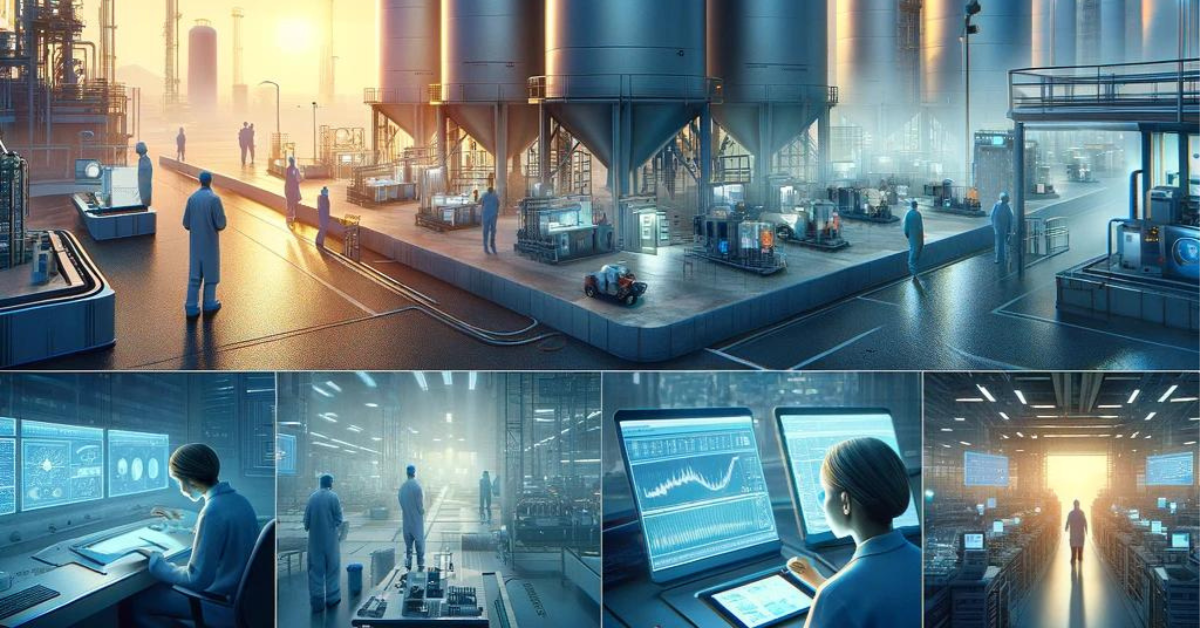
As a Cryogenic Production Technician, you’ll work with the coldest substances on Earth, handling temperatures as low as minus 196 degrees Celsius, a feat that combines cutting-edge technology and safety measures.
Morning: The Cold Start
My day begins with a comprehensive check of the cryogenic plant’s safety systems. Cryogenics, the science of producing and managing extremely low temperatures, requires a high level of precision and care. We work with liquids that are colder than the surface of Pluto, and the potential for accidents is real if proper protocols aren’t followed. Safety is our mantra; it’s embedded in every task we perform.
After the safety checks, I review the production schedule. Our facility produces a range of cryogenic liquids, including nitrogen, oxygen, and argon, which are essential for various industrial and medical applications. Each liquid has its own set of production parameters and uses, from preserving biological samples to fueling rockets.
Midday: The Heart of Production
As the day progresses, I monitor the purification process, where gases are cooled to their condensation points, and then distilled to separate them into their pure liquid forms. This is at the heart of our operation. It requires a delicate balance: adjusting valves, monitoring pressure levels, and ensuring the machinery operates within its optimal range. The slightest miscalculation can disrupt the entire process, so vigilance is key.
Lunch breaks are short and social, a time to warm up and share stories with colleagues. Despite the cold environment we work in, the team’s spirit is always warm.
Afternoon: Challenges and Problem-Solving
The afternoon often brings challenges. Today, for instance, a sensor malfunctioned in one of the storage tanks, sending inaccurate temperature readings. In cryogenics, accurate temperature measurement is crucial. A few degrees can make the difference between maintaining a stable liquid state and unintentional gasification, which can lead to pressure build-ups and, in worst-case scenarios, explosions.
Troubleshooting such issues requires a deep understanding of both the physical processes at play and the sophisticated technology that monitors and controls them. After isolating the problem, I worked with the maintenance team to replace the faulty sensor and recalibrate the system. Problem-solving on the fly is part of the job, and it’s incredibly rewarding to keep the operation running smoothly.
Evening: Reflections and Accomplishments
As the day winds down, I document the day’s work, noting any irregularities and how they were addressed. This documentation is vital for continuous improvement and ensures a safe handover to the next shift.
Reflecting on the day, the sense of accomplishment is palpable. Working as a Cryogenic Production Technician isn’t just about enduring the cold; it’s about playing a crucial role in industries that impact the world in myriad ways. From enabling space exploration to advancing medical technologies, the work we do touches lives across the globe.
And as I head home, leaving the extreme cold behind, I can’t help but feel a warm sense of pride in the work we do. In the world of cryogenics, where every day brings new challenges and opportunities, the thrill of pushing the boundaries of science and technology never fades.
So, if you’ve ever wondered about the people who work at the very edge of physical possibility, producing the coldest substances known to man, now you have a glimpse into our world. A day in the life of a Cryogenic Production Technician is anything but ordinary, and it’s a role I wouldn’t trade for anything.
#CryogenicTech #DayInTheLife #ScienceAndTech #CoolJobs #Cryogenics #ExtremeCold #IndustrialSafety #Innovation #BehindTheScenes #TechCareers